How to Choose Paper Cups for a Restaurant
For a restaurant, choosing a paper cup is also a decision about order assembly, storage and transport. A cup that works well at the counter may be awkward in a delivery setup or hard to distinguish from another size during the lunch rush.
Look at the full journey of a drink before choosing your range. The aim is to match your menu and service routine, rather than accumulate extra product references whenever an urgent need comes up.
Map the parts of your service that use cups
Separate hot drinks from cold drinks, then distinguish dine-in orders from those leaving the restaurant. Look at breakfast, lunch and dinner individually. A coffee included with a meal may not use the same portion as a drink sold on its own.
Include occasional requirements such as group meals, catering, office orders and private events. They may involve several preparation areas or different pickup arrangements even when the drinks themselves stay the same.
For each situation, record the current cup, lid and any difficulties staff encounter. Ask the people assembling orders what slows them down. Sometimes the issue is the way products are stored and identified, rather than the capacity of the cup.
Give each recipe an exact product reference
“Small,” “regular” and “large” are useful menu terms. A purchasing list needs more detail: capacity, intended hot or cold use, diameter and the actual product reference.
For example, ASWAL lists a 12 oz hot paper cup and a separate 12 oz cold paper cup. They carry the same nominal capacity but are different products for different applications. Keep that distinction in your ordering records.
| Service situation |
Sizes to assess against the recipe |
Main trial to run |
| Takeout coffee with a meal |
8 oz hot cup or 12 oz hot cup |
Room for additions and the matching lid |
| Individual cold drink |
12 oz cold cup or 16 oz cold cup |
Ice portion and liquid serving |
| Larger cold drink |
20 oz cold cup or 22 oz cold cup |
Finished recipe, handling and transport |
Use this table to organize trials. It does not mean every restaurant needs every size, or that a particular drink always requires the same capacity.
Test an order as it actually leaves the restaurant
At the pickup counter
Prepare a complete order with a sample cup. Fit the lid, identify the drink and place it in the carrier your team normally uses. Make sure it can be retrieved without moving hot food or reopening finished bags.
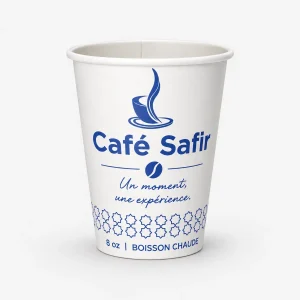
If staff write a name or recipe on the cup, plan where that information will go. With custom artwork, discuss a readable space before approving the design. An attractive print should still leave your team able to identify the correct order.
For delivery orders
Assess the cup together with the actual drink carrier and other packaging. A compatible lid alone is not a guarantee against spills. The support around the cup, fill level and movement during transport also matter.
Reproduce the usual handling route under conditions your team can assess safely. Record specific issues instead of relying on “it seems fine.” Ask the supplier to confirm any performance your operation requires; do not assume a claim that is missing from the product information.
For a menu change, repeat the trial with the new recipe. A different amount of ice or foam can change how much room remains below the lid even when the same cup is used.
Select lids at the same time as cups
Buying cups first and later searching for a similar-looking lid can lead to mismatched references. Diameter is one requirement; intended use and fit on the particular rim also need to be confirmed.
ASWAL’s lid range includes hot and cold applications. Its cold lid pages distinguish an opening for a straw from a version without a straw opening. The latter description does not establish that the product has a direct-drinking spout. Check the product before defining how the drink will be served.
Have the cup-and-lid combinations identified in your quote. Your team can then reorder a confirmed pair without interpreting approximate product names.
Make the preparation station easy to use
A concise product range can help if it covers the menu properly. Keep the most-used sizes within reach and label their storage positions. Avoid combining hot and cold references of the same capacity in one unmarked stack.
Create a short service sheet showing the drink, cup size, lid and transport support. It should be clear enough for a new staff member to follow during a busy period. An internal photo of the approved combination can support the written product references.
When changing models, plan how the old stock will be used alongside the new delivery. Do not mix accessories simply because they look alike. Keep carton labels available until staff are comfortable with the change.
Order from actual usage, not just guest counts
The number of meals served does not automatically tell you how many cups to buy. Some guests dine in, some orders contain several drinks and others contain none.
Track cup consumption by size and period. Compare it with sales to understand differences caused by trials, preparation mistakes, complimentary drinks or menu changes. Your restaurant’s own records are more useful than a standard percentage borrowed from another business.
When comparing suppliers, request prices for the same requirement: cups, quantities, any printing, lids and delivery. Ask for case packing, applicable charges and a confirmed schedule. A general example should never be treated as a minimum order or a supplier’s delivery promise.
Record who checks stock and who places the order. Even a well-chosen product range can be difficult to manage when purchasing responsibility is unclear between the kitchen, counter and management team.
Add branding without getting in the way of service
A printed cup can carry your restaurant’s identity into takeout orders. Keep the name readable and consider whether a sleeve, label or the customer’s hand will cover part of the design.
Avoid date-specific messages if the same inventory needs to work for a long period. A short campaign requires a different plan: estimate demand during the promotion and decide how any remaining stock will be handled.
Turn the menu into a clear cup selection
A sound choice connects one recipe with a cup, a lid and a service method. Review ASWAL products, prepare a visual in Design My Cup, then request a quote with your drink list and quantities by size. This gives the first conversation a concrete starting point.