Paper Cups for Distributors: How to Choose a Manufacturer
For a packaging distributor, selecting a paper cup manufacturer affects the warehouse, sales team and customers who rely on a consistent product reference. An appealing catalogue is only the start of that assessment.
This guide is for distributors reselling packaging to businesses. Cups for automatic vending equipment are a separate application: compatibility needs to be confirmed with the equipment manufacturer and cannot be inferred from an ounce label alone.
Define the customers your range needs to serve
Start with the requirements of existing customers: cafés, restaurants, hotels, institutions and foodservice operators. Separate recurring demand from occasional projects. A cup reordered every week has a different role from one printed for a single event.
Record the sizes sold, hot and cold applications, lid requirements and requests for custom printing. Include needs you currently cannot meet. This gives a prospective manufacturer a useful range brief instead of a general request for pricing.
A broad catalogue does not mean every reference belongs in your warehouse. Match the selection to your customer base and your capacity to hold and manage inventory.
For a new market, distinguish demonstrated demand from a sales forecast. Both are useful, but they should not be presented as interchangeable when discussing purchasing plans.
Compare products using a reference sheet
Two items described as “white 12 oz cups” can differ in meaningful ways. Compare complete product descriptions and ask for missing information rather than filling gaps with assumptions.
| Information |
Why it matters |
Useful confirmation |
| Capacity and rim diameter |
Distinguishes drink portion from lid fit |
Product sheet and exact reference |
| Hot or cold application |
Prevents unapproved substitutions |
Intended-use description |
| Listed wall construction and material |
Establishes what is being compared |
Confirmed specification |
| Matching lid |
Supports a consistent cup-and-lid offer |
Approved pair of product references |
| Case packing |
Affects receiving, storage and order picking |
Units per case and dimensions to confirm |
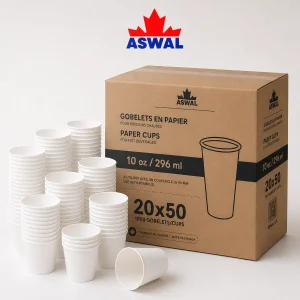
ASWAL’s 12 oz hot cup, 16 oz hot cup and 20 oz cold cup illustrate distinct catalogue references. A 22 oz cold cup is also listed. Start with the product pages, then confirm the additional information your distribution operation needs.
Evaluate samples with the customers who will use them
A warehouse inspection cannot fully reproduce counter service. When samples are available, assess them with the drink, lid and carriers the customer actually uses.
Collect observations in a shared form covering preparation, lid fit, handling and storage. Record the tested product reference and date. Structured feedback is easier to use than an opinion passed along verbally weeks after the trial.
Where a technical requirement forms part of your sales offer, request documentation that supports it. A favourable impression of a sample should not become a general performance guarantee.
Keep track of who approved the sample and for which application. Approval by one customer for a particular drink does not automatically qualify the same reference for every customer in your range.
Establish what is manufactured and where
Understand the partner’s role: manufacturer, importer, distributor or a combination of activities. Ask about origin for the selected products rather than applying the location of a head office to an entire catalogue.
ASWAL describes its paper cup manufacturing in Montréal. For your purchasing file, confirm the relevant references and the information you may use in your own sales material.
Manufacturing location alone does not establish a lead time, price or certification. Each of those points needs separate confirmation for the project you are discussing.
Put order terms into a usable written record
Pricing and scope
Provide each candidate with the same selection and volumes. Ask for cups, lids, any printing, artwork preparation and transport to be identifiable in the quote. Clarify the terms for repeat orders as well as the first order.
If your business requires particular carton presentation, labelling or delivery arrangements, describe those needs. An option mentioned in a conversation is not yet a confirmed service commitment.
Keep the current quote alongside the approved product sheet. That makes it easier for purchasing and sales staff to work from the same information when an order is prepared.
Forecasts and replenishment
Discuss observed volumes, variation and the periods that matter most to your customers. Ask how forecasts should be shared and when an order becomes firm. Do not assume a forecast automatically reserves inventory or production capacity.
Have the applicable timing confirmed for the product, printing and delivery arrangement. Establish how changes will be communicated and who can answer operational questions when they arise.
Organize customer artwork approvals
A distributor may receive different logo versions from several people at the same customer. Identify the final approver and keep a file for each customer, cup size and artwork version.
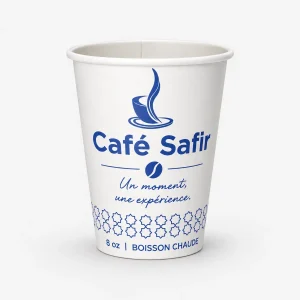
Design My Cup can help communicate the intended appearance. Production files, colours and the print proof must then be confirmed for the project. A preview supports the conversation; it does not replace final print approval.
Discuss what happens when a customer changes an address, updates a logo or switches sizes. A repeat order with a changed design may require new preparation. Clarify the process before promising an identical reprint.
Keep approved and superseded files separate in your internal records. A clear filename and approval date are useful safeguards when several customer projects move through the same team.
Plan the process after goods arrive
Define the receiving checks your warehouse will make: references, quantities, carton condition and accompanying documents. Retain the identifiers needed to trace an order and explain a discrepancy.
Agree on how issues should be reported and what evidence is useful. Photos, an order number and the affected product reference make a discussion more specific. Return or resolution terms should be confirmed rather than assumed.
After the first deliveries, compare observed service with the agreed terms. Evaluate the relationship using facts that matter to your customers, rather than relying only on the initial presentation.
Build a range that is clear to sell and reorder
A workable manufacturer-distributor relationship rests on precise references and shared expectations. Review ASWAL products, then request a quote with your customer markets, priority formats and forecasts. Those details provide a concrete basis for discussing manufacturing, custom printing and replenishment for your range.
For local sourcing, see our guide to paper cups in Montreal, available sizes and custom printing.