How to Choose the Right Lid for a Paper Cup
A paper cup lid should be chosen for the specific cup, not just for its ounce size. Different capacities can share a rim diameter, while another size in the same range may need a different lid. A clear match between the cup, the lid and the way you serve the drink is the starting point.
This guide explains how to compare ASWAL’s listed lids and check a combination in your own service routine. A matching diameter is useful information, but it should not be treated as a complete compatibility guarantee on its own.
Record the diameter before ordering
Capacity describes the cup’s nominal volume. The diameter shown on the product page provides a separate measurement to consider when selecting a lid. Keep both details in your purchasing records so staff do not have to infer one from the other.
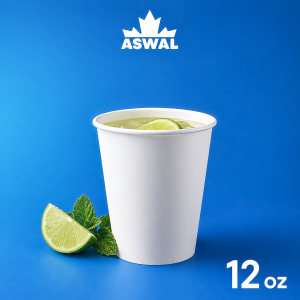
ASWAL’s 8 oz hot paper cup is listed with an Ø80 mm diameter. The 10 oz hot paper cup and 12 oz hot paper cup are listed as Ø90 mm. A single lid should therefore not be assigned automatically to every size in the range.
Record the full product reference, including whether it is a hot or cold cup. A note such as “lids for medium coffees” becomes unclear when a supplier, recipe or cup size changes. A documented reference remains useful to the person placing the next order, even if they were not involved in the original selection.
Separate hot-drink and cold-drink lids
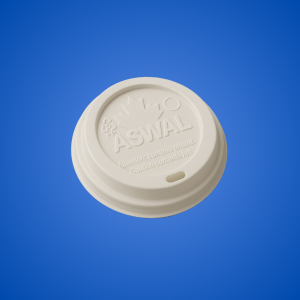
ASWAL’s lid category includes products listed for hot beverages and products listed for cold beverages. Start with the appropriate family. Then examine the opening and how customers will use the drink with the actual model under consideration.
| Catalogue product | Listed use | Question to resolve |
|---|---|---|
| Hot Lid, Ø90 mm | Hot beverages | Is it confirmed for my exact hot cup reference? |
| Cold Lid, Ø90 mm, with straw opening | Cold beverages with a straw opening | What opening and straw suit the intended service? |
| Cold Lid, Ø90 mm, without straw opening | Cold beverages; no straw opening in the description | How does this model fit the way the drink will be served? |
The catalogue wording “with straw” should not be taken as confirmation that a straw is included. Likewise, “without straw” does not establish that the lid has a direct-sip opening. Confirm the model and opening before designing your beverage service around either assumption.
Check the exact combination, even when diameters match
A common diameter helps narrow the selection, but it does not replace checking the cup-and-lid pair. The rim shape and the way the lid fits also matter in everyday use. Ask ASWAL to confirm compatibility between the specific references you intend to order.
Avoid combining leftover lids with a new cup reference without checking first. Cartons can look similar, and cups may carry the same nominal capacity while belonging to different ranges. Identify each approved combination and store products in a way that discourages substitutions at the counter.
For a business buying centrally for several locations, share one approved matching list with every team. A combination checked at one café is of little help elsewhere if the cartons are later labelled only “small” and “large.” Include enough detail for staff to choose correctly during a busy shift.
A specific point about the 8 oz cup
ASWAL’s 8 oz hot paper cup is listed as Ø80 mm. The lids currently shown in the reviewed category are Ø90 mm. Do not order an Ø90 mm lid for that cup based on appearance alone. Contact ASWAL to confirm the appropriate option for the 8 oz format.
Try the combination in your service routine
If samples or a proposed combination are available, involve the people who actually prepare and hand over the drinks. Use the intended recipe, portion and closing method. Follow your establishment’s handling procedures when evaluating hot beverages.
- Check that the intended cup and lid references are being used.
- Observe how the lid is fitted without applying unusual force.
- Look around the rim to confirm that it is properly engaged.
- Review handling and placement in the drink carrier used by your business.
- Record any difficulty and raise it before confirming an order.
A service trial helps assess your operating routine. It does not establish a leakproof guarantee, maximum temperature or holding time. Where those characteristics are necessary for your decision, obtain the relevant product information and supplier confirmation rather than inferring them from a brief test.
Allow for ice and toppings
A cold drink may contain ice, foam or other ingredients that occupy space near the top of the cup. Check the complete serving with the selected lid. Filling a cup without allowing for closure can create a problem with the portioning method rather than the lid diameter.
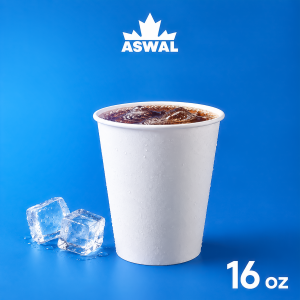
The 16 oz Cold Paper Cup, Ø90 mm is one ASWAL reference to review for cold drinks in that size. Keep the lid decision tied to the exact product and recipe. Ask for additional dimensions or model details if your drink includes a topping that could affect closure.
Do not assume a lid used successfully with one drink will suit every item on the menu. A change in portion, ice level or topping may be enough to justify another service check, even if the cup reference remains unchanged.
Manage lids as a separate stock item
Track lid use separately from cup use. Not every drink necessarily leaves the counter with a lid, and busy periods can affect how many are used. A fixed assumption made at the start of the year may leave you with plenty of cups but too few matching lids.
Keep compatible references close together and label them clearly. When changing a product, plan how the old stock will be handled. Avoid mixing two models in the same dispenser simply because they appear to have the same diameter. Clear storage makes the purchasing decision easier to follow in practice.
Send a precise request
Before requesting a quote, gather the cup reference, diameter, beverage type, intended drinking method and requested quantity. Explain whether you are replacing only a lid or assessing an entirely new cup-and-lid combination.
The goal is a combination that staff can identify and use consistently. Start with the lids actually listed by ASWAL, confirm their match with your cups and retain that information for future orders. A small amount of detail in the purchasing record can prevent repeated uncertainty at the service counter.