Choosing a Canadian paper cup manufacturer can bring your business closer to the company making its packaging. The value goes beyond an origin statement. It also depends on clear communication, well-defined product references and a workable approach to future orders.
ASWAL states that it manufactures paper cups in Montreal. For cafés, restaurants, hotels and distributors, that local manufacturing relationship is worth assessing against practical criteria, without assuming a particular price, lead time or environmental benefit.
Manufacturers, distributors and resellers can all offer paper cups, but they perform different roles in the supply chain. Ask who makes the product, who handles customization and who answers questions about the selected reference. Those details are more useful than a broad description such as “local company.”
ASWAL’s Canadian paper cup manufacturer page explains its manufacturing position, while About ASWAL provides company context. For a specific order, confirm the origin of the cup concerned and discuss accessories separately. A statement about where cups are made does not necessarily describe the origin of every lid.
Keep this information in your supplier file. It can help when purchasing responsibilities change, when a business customer asks about origin or when your company reviews its sourcing policy. A clear record prevents the same basic questions from having to be resolved with every reorder.
A direct manufacturing relationship can create an opportunity to discuss the product around your service: the drink, cup size, lid and artwork. Whether that opportunity is useful depends on how the account is managed. Identify your contact and agree on how questions or changes should be submitted.
For teams operating in Quebec, being able to describe recipes and artwork in the language they use at work can make preparation easier. Decisions should still be recorded. A productive conversation should leave you with product references and approvals that everyone involved can find later.
Compare the quality of the answers you receive. A supplier who separates confirmed details from items still requiring review gives you a firmer basis for a decision than a general assurance that every request will be possible.
Geographic proximity does not replace an ordering schedule. Confirm the arrangements that apply to your products, then establish your own stock review routine. A café serving drinks every day has different requirements from an organizer using cups for three annual events.
Prepare usage records by size and period. Note new locations, seasonal peaks and promotions that could change demand. These details make a conversation with the manufacturer more productive than a single overall estimate sent shortly before stock runs out.
| Discussion point | Why it matters | Information to prepare |
|---|---|---|
| Cup references | Prevent product mix-ups | Sizes, product names and diameters |
| Ordering frequency | Support replenishment planning | Observed usage by period |
| Customization | Identify the approved version | Artwork files and approval record |
| Delivery | Assess the complete proposal | Destination and receiving requirements |
| Expected changes | Flag future needs | Events, promotions and new locations |
A unit price alone does not describe the whole purchasing decision. Compare proposals on an equivalent basis: the same product, requested quantity, customization and destination. Establish what each offer includes and what still needs a separate confirmation.
Consider the space required to receive and store the order. An arrangement that suits a warehouse may be awkward for a small café with limited back-room storage. Local manufacturing should not be assumed to solve that issue; it is a practical requirement to discuss as part of the proposal.
If the project covers several locations, identify all destinations. Delivery arrangements quoted for one address should not automatically be applied to the others. Your purchasing comparison should reflect the way your business actually receives and uses its packaging.
Also distinguish a first printed order from a repeat order. Changes to the artwork or selected products may require another review. Keeping the approval record with the purchasing details makes it easier to explain whether a new request is identical to the previous one.
Buying from a Canadian manufacturer is most useful when its range fits the drinks you serve. Start with current needs, then identify realistic additions. Adding sizes without evidence of demand can make purchasing and service more complicated without improving the menu.
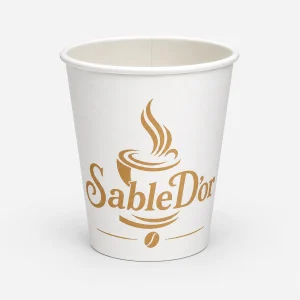
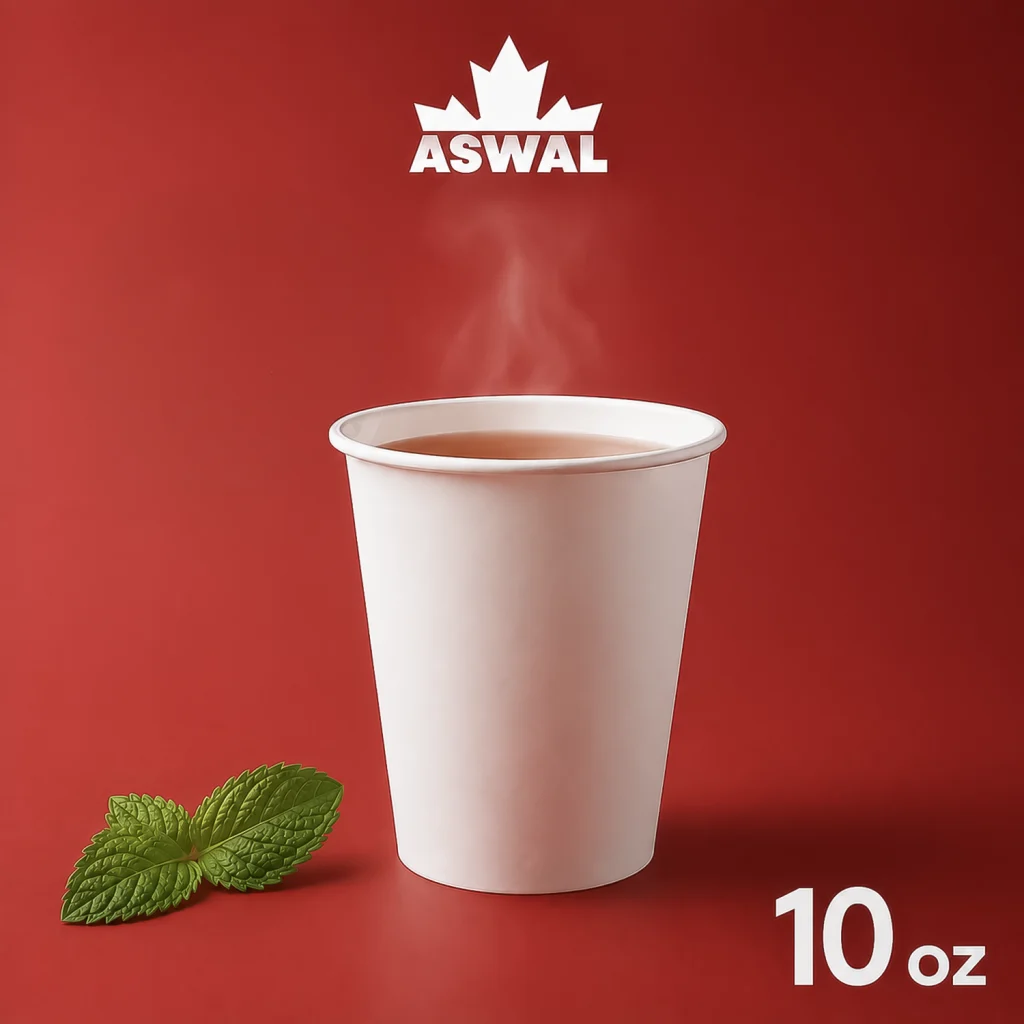
ASWAL’s 10 oz Hot Paper Cup, Ø90 mm and 16 oz Hot Paper Cup, Ø90 mm are two capacities to assess against your recipes. For cold beverages, review the cold paper cup range. Capacity alone is not a reason to substitute a cold cup for a hot cup or vice versa.
Include the appropriate lids and accessories in that review. You are choosing a usable combination for the counter, not simply a cup that looks suitable in a catalogue photograph. Ask for confirmation where compatibility information is needed.
Canadian origin describes a manufacturing location. By itself, it does not establish local recyclability, compostability or a measured reduction in carbon emissions. Those questions require information about the product, transportation and the collection or processing systems available after use.
If your business wants to make an environmental statement, request documentation supporting the specific claim. Check the requirements at the place where cups will be used as well. A disposal message printed for an event should reflect the facilities actually available at that venue.
You can explain that your business works with a Montreal manufacturer without adding undocumented performance claims. A precise, verifiable message is easier to keep consistent across packaging, staff communication and your website.
Keep selected references, contacts, quotes and approved files in a shared record. After several orders, compare forecast consumption with actual usage. That review helps you adjust future requests and discuss replenishment using evidence from your own operation.
For branded cups, an initial concept in Design My Cup can help your team describe the project. Follow it with confirmation of the printing and ordering arrangements that apply to your request. Keep the final approved version clearly separated from early design experiments.
The right Canadian manufacturer offers products and an ordering process suited to your needs. ASWAL’s Montreal manufacturing provides a starting point for that conversation, while the usual purchasing checks still matter. Review ASWAL’s products, gather your sizes and usage estimates, and request a quote for the way your business operates.
Get a free quote for your custom paper cups.
Nous utilisons des cookies nécessaires au fonctionnement du site. Avec votre accord, des cookies statistiques nous aident à améliorer votre expérience. Vous pouvez accepter, refuser ou personnaliser votre choix, puis le modifier à tout moment.