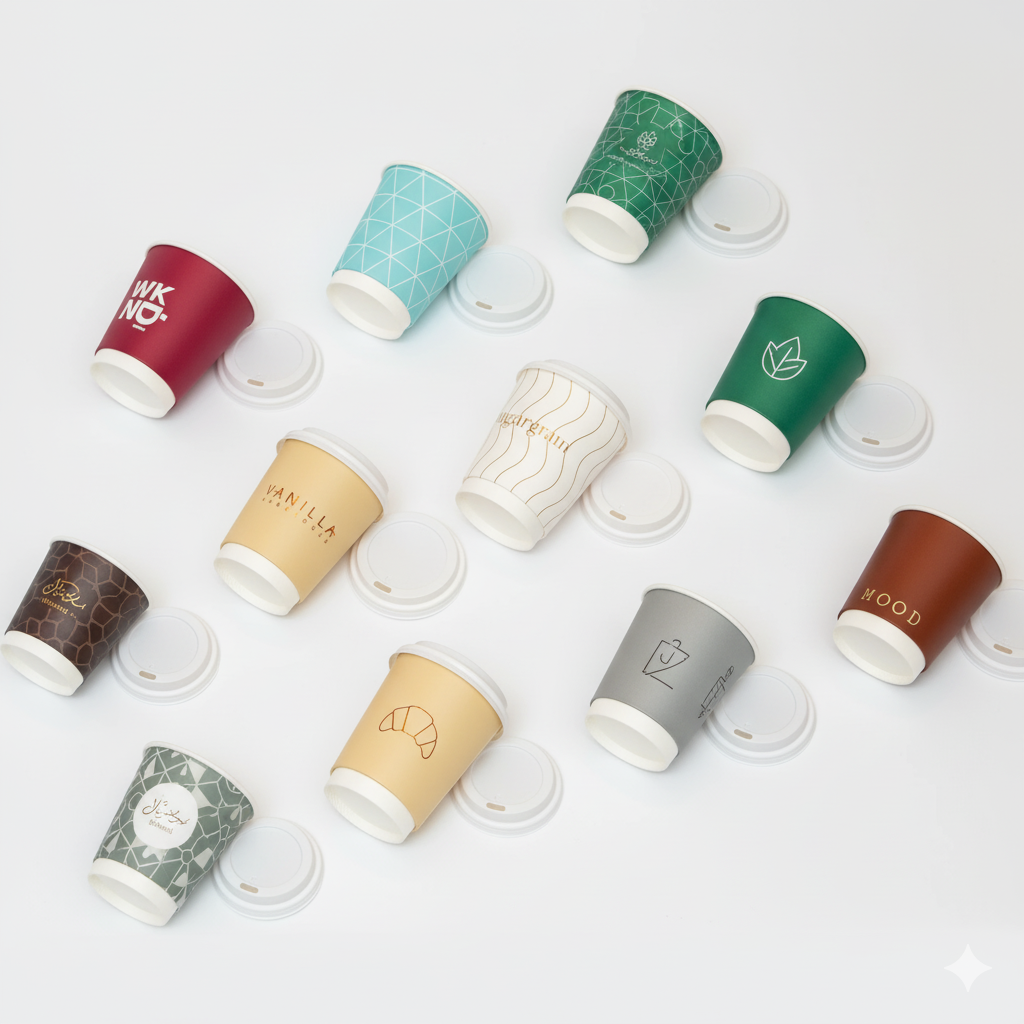
In the debate around single-use packaging, paper cups occupy a paradoxical place: seen as “natural” and therefore intuitively virtuous, they are in fact composite products whose environmental footprint depends on many invisible parameters. Their popularity driven by takeout and events has consequences for resource use, energy demand, and waste management. Understanding this reality helps avoid false good ideas and steer choices toward solutions that are genuinely more resource-efficient.
Understanding the footprint of paper cups
A “paper cup” is almost never paper alone. It is typically a paperboard made from virgin fibers since food-contact uses often limit the use of recycled fibers combined with an inner barrier for leak resistance, most often polyethylene (PE) or a bioplastic such as PLA, and sometimes water-based dispersions or other technologies. Add to this inks, adhesives, and sometimes special treatments. Fiber sourcing (responsibly managed forests, FSC/PEFC certifications) and the type of barrier already shape a significant part of the footprint.
Manufacturing requires energy and water, especially for pulping, drying, and depending on the grade bleaching. Even thin plastic barriers add complexity and impacts. One advantage is the low weight and efficient stacking, which can reduce transport emissions. But the disposable nature of the product dilutes these benefits: the impact per use remains high because a new item must be produced for every drink.
At end of life, the “recyclable” or “compostable” image needs nuance. Barrier layers make recycling possible only in dedicated facilities that can separate fibers from polymers; such infrastructure is still limited and often under-capacity. Compostability, when it exists, is usually industrial rather than home composting, and food contamination complicates collection. If littered, cups break down slowly, and some layers can release micro-debris or additives making proper collection and treatment essential.
Life-cycle assessment and material comparisons
Life-cycle assessments (LCA) of paper cups repeatedly highlight the same hotspots: fiber production (forestry, energy, water), paperboard and barrier manufacturing, cup conversion, and end-of-life. Depending on the local electricity mix, the share of energy in the climate footprint varies, but the barrier is often a meaningful contributor both for climate impacts and for recyclability challenges. Logistics usually weigh relatively little thanks to the product’s lightness, compared with the rest of the life cycle.
Against single-use plastic cups (PP, PS), LCA results vary by indicator. Paper cups sometimes show comparable or slightly lower greenhouse gas emissions, but they tend to use more water and rely on biomass and forest land. Plastics, meanwhile, depend on fossil resources and are rarely recycled in practice in this format. On litter and micro-debris, no material is “good” if it ends up in the environment; the effectiveness of collection systems and sorting behavior remains decisive.
Compared with reusable options (thicker polypropylene, stainless steel, glass), paper cups lose out as soon as washing and reuse systems are in place. Many LCAs converge: beyond a certain number of uses often somewhere between roughly ten and a few dozen depending on cup size, washing practices, energy, and logistics reusables tend to win on climate and waste. Optimizing washing (moderate temperatures, efficient machines, low-impact detergents, shared systems) is the key lever. When reuse isn’t feasible, choosing paper cups from certified fibers, with more easily recyclable barriers and clearly identified collection pathways, helps reduce the real-world footprint.
Paper cups are neither heroes nor perfect villains: they are composite products whose environmental performance depends on materials, design, infrastructure, and use. Their main strength light weight does not offset their disposable nature when a well-managed reusable alternative exists. The most robust path is to reduce single-use, organize reuse, and when single-use remains unavoidable, choose better-designed cups and ensure a controlled end of life. It’s this combination of restraint, engineering, and organization that determines the true impact.

 EN
EN  FR
FR