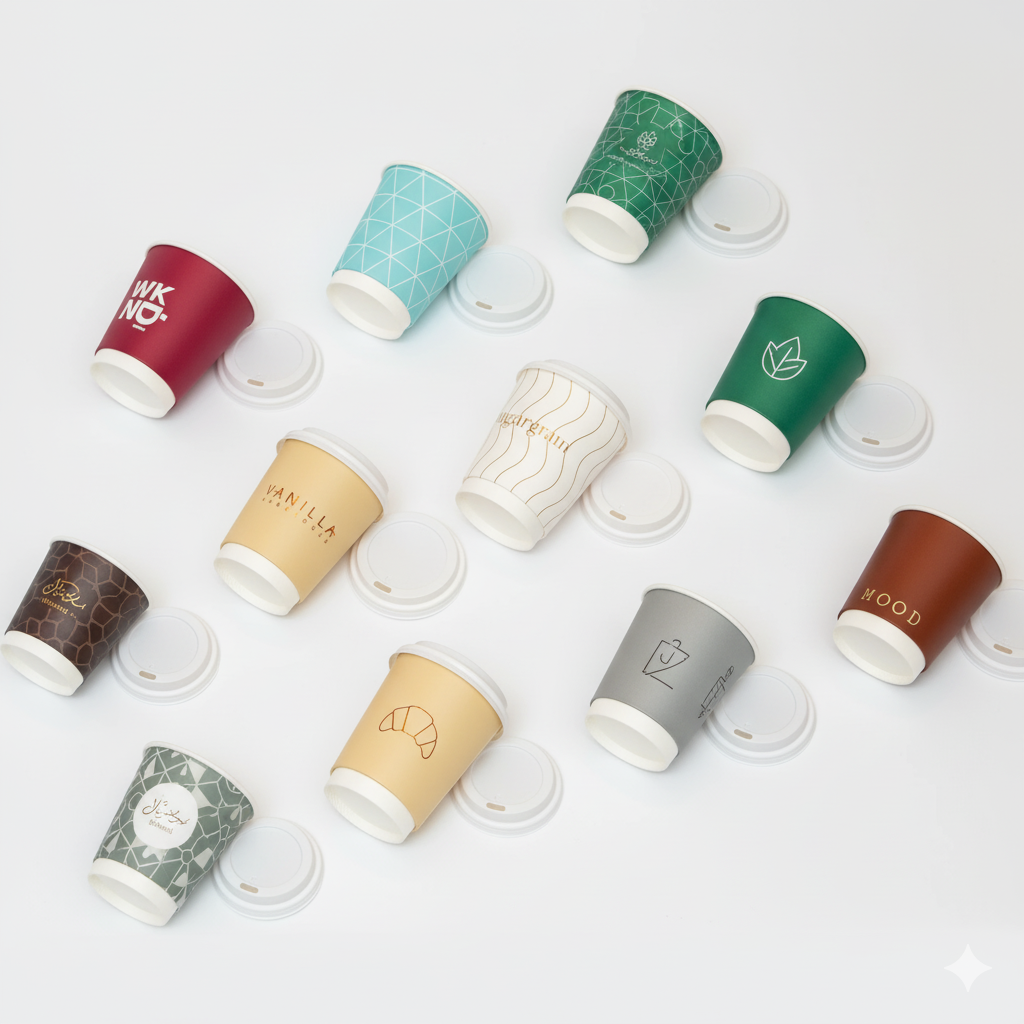
Sustainable paper cups carry an appealing promise: a credible alternative to single use plastic while balancing hygiene, convenience, and lower environmental impact. But behind the “sustainable” label are real technical, regulatory, and logistical trade offs. As reuse expands and recyclability requirements tighten, the future of these cups will depend on their ability to fit into collection, sorting, and processing ecosystems that actually work in real conditions.
What is the future of sustainable paper cups?
The market is being reshaped by a double pressure: public policies restricting single use plastics, and consumer demand for solutions perceived as cleaner. In this context, paper cups are moving toward mono material designs and plastic free barriers engineered to run through paper and cardboard recycling streams. Their near term future will be determined by whether they can deliver real world performance, including leak resistance, heat resistance, and comfort, while remaining compatible with recycling beyond laboratory testing.
In the medium term, hybrid models will emerge. Reuse will grow in closed settings such as offices, stadiums, and festivals, while highly recyclable paper cups will serve widespread takeout. Success will depend on dense collection points, simple digital deposit systems, and cup to cup partnerships that turn recovered fiber into new cups. Where washing infrastructure is limited or energy intensive, paper cups optimized for recycling may show a favorable environmental outcome compared with reusable options.
By 2030, standardization will be a major driver. This includes cup formats, inks and adhesives that can be removed during recycling, markings that help optical sorting, and harmonized criteria for “recyclable” and “compostable” claims. Brands that invest in traceability, through QR codes, invisible codes, or digital watermarking, will be able to improve return rates and strengthen impact data. The future will not be a simple paper versus reuse debate. It will be contextual: the right container for the right use, aligned with local infrastructure and clear rules that reward better design.
Innovations, limits, and supply chain challenges
On the innovation side, water based dispersion barriers and thin bio based layers without PFAS are gradually replacing conventional plastic linings while keeping leak resistance and grease resistance. New paper cup ready designs are emerging that make pulping easier and improve fiber yield. Lighter designs, optimized double wall options for hot drinks, and food contact compliant inks also support better recycling and reduce risks linked to substances of concern.
Limits remain. Performance under prolonged moisture exposure, thermal stability, and stiffness must improve without relying on problematic barriers. Home composting is rarely a realistic end of life option for these products, since most require industrial composting conditions that are not widely available. There is also the gap between theoretical and real impact: a recyclable cup only matters if it is actually collected, sorted, and processed, which depends on consumer guidance, clear signage, and economic incentives through extended producer responsibility
The challenge is also economic and systemic. Certified fiber supply, cost volatility, and EPR fee modulation will influence material choices. Life cycle assessments often show that reuse wins in closed loops with high return and rotation rates, while highly recyclable paper cups can win where collection logistics perform well. To strengthen the sector, the market will need performance standards, clear proof of food safety without PFAS, and sorting infrastructure able to identify and recover these cups at scale.
Sustainable paper cups can have a credible future if the conversation shifts from green sentiment to proof: proof of real world recyclability, food safety, and measurable climate progress. Their role will be strongest when they complement reuse where reuse performs best, and when they are integrated into reliable systems for collection and transformation. In other words, the future is not only about the material. It is about the ecosystem around it.

 EN
EN  FR
FR