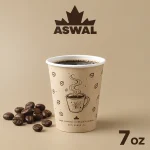
Paper cups have become the “natural” alternative to single use plastic cups. They carry the promise of a renewable material that feels more acceptable to the public and better aligned with new regulatory requirements. Yet behind this positive image is a more nuanced reality shaped by technical innovation, recycling constraints, and real world usage. What sustainable future do these cups have tomorrow, between industrial progress and the gradual end of disposable everything?
Paper cups: environmental promises and limits
Paper cups rely on a renewable resource and, in many cases, fibers sourced from certified forests. Compared with some fossil based plastics, their carbon footprint can be lower, especially when recycled fibers are used and supply chains are optimized. Their positive perception also supports rapid adoption in events, offices, and takeout. They contribute to the shift away from the most problematic single use polymers, aligning brands with the expectations of consumers and regulators.
But a “paper” cup is not only paper. It usually includes a barrier against moisture and grease, historically polyethylene and more recently bio based PLA or water based dispersion coatings. These layers reduce recyclability in standard paper streams, require specific separation processes, and may end up in incineration when there is no dedicated sorting. Paper pulp production also uses water and energy, and impacts vary widely depending on fiber origin, forestry practices, and additives.
Life cycle assessment reminds us that single use, regardless of material, carries an environmental burden that is hard to erase. The benefits of paper cups depend on practical conditions such as collection rates, proximity to suitable recycling facilities, reduced leakage into the environment, and true substitution of higher impact options. Compostability, often highlighted, typically depends on specific industrial infrastructure and should not be confused with biodegradability in nature. In short, these cups have potential, but their environmental value depends as much on the ecosystem around them as on their composition.
Innovation, recycling, and the shift away from disposable
The industry is moving fast. Water based coatings, mineral formulations, and separable polymers are improving water resistance while making fiber recovery easier in mills. Some manufacturers are developing near mono material cup designs where the barrier layer is thin enough or chemically compatible enough to run through existing repulping and separation lines. Eco design efforts also extend to inks, adhesives, and lids to reduce recycling disruptors and limit substance migration.
Cup to cup recycling is expanding through separate collection programs in companies, universities, stations, and events. Once sorted, cups are repulped in suitable equipment to maximize fiber yield. Recovered fibers can return to packaging and ideally into new cups. The challenge is reaching critical volumes and keeping the stream clean. Leftover liquids, mixed waste, and incompatible lids reduce quality. That is why design standards and extended producer responsibility programs matter, because they can fund collection and recovery and push for better system performance.
At the same time, the end of disposable everything is taking shape. European and national regulations increasingly favor reuse, require reductions in single use plastics, and encourage deposit systems. For on site consumption, washable reusable cups are becoming the norm. For takeout, borrow and return networks, lightweight reusable cups, and shared washing platforms are scaling. The durable future looks like a mix: reuse first where it works best, supported by better designed paper cups that are separately collected and genuinely recycled where reuse is harder.
The sustainable future of paper cups is not a simple yes or no. They can be relevant where reuse is difficult, but only if they are eco designed, sorted separately, and recycled through truly operational systems. The direction is clear: reduce single use, standardize solutions, and align materials innovation, collection models, and everyday habits so that good intentions become measurable environmental benefits.